
Low-Carbon Heating Installations Across Essex
Transitioning your property to renewable energy requires meticulous mechanical engineering and an understanding of building thermodynamics. Operating across Essex, our MCS-certified engineers design, integrate, and commission bespoke low-carbon heating and hot water installations. Whether you are retrofitting a heritage home, upgrading an off-grid rural commercial site, or developing a premium modern self-build, we provide engineered reliability tailored specifically to your property infrastructure.
Explore Our Specialised Installation Technologies
Select an engineering discipline below to explore our comprehensive design specifications, system integrations, and property suitability criteria.
01
Biomass Boiler Installations
Ideal for large, off-grid rural properties and traditional estate retrofits requiring high-temperature distribution. Our advanced biomass installations utilise sustainable wood pellets or chips to deliver continuous thermal outputs exceeding 70°C, dropping directly into traditional cast-iron radiator infrastructure without modification.
02
Heat Pump Installations
Harness the infinite ambient energy within the external air to provide complete, low-temperature space heating and domestic hot water. Our premium, high-temperature heat pump installations integrate seamlessly into existing wet radiator networks or modern underfloor heating layouts, drastically reducing your carbon footprint.
03
Solar Thermal Installations
Capture direct solar radiation to harvest up to 60% of your property’s annual hot water demands completely free. Using high-efficiency flat-plate panels or evacuated tube arrays, our solar thermal systems integrate into dual-coil cylinders to take the heavy lifting off your primary heating plant.
The Greenables Installation Standard
We do not believe in off-the-shelf heating packages. Our reputation across Essex is built on delivering rigorous hydraulic engineering, transparent compliance, and maximum system performance.
MCS Certified Quality
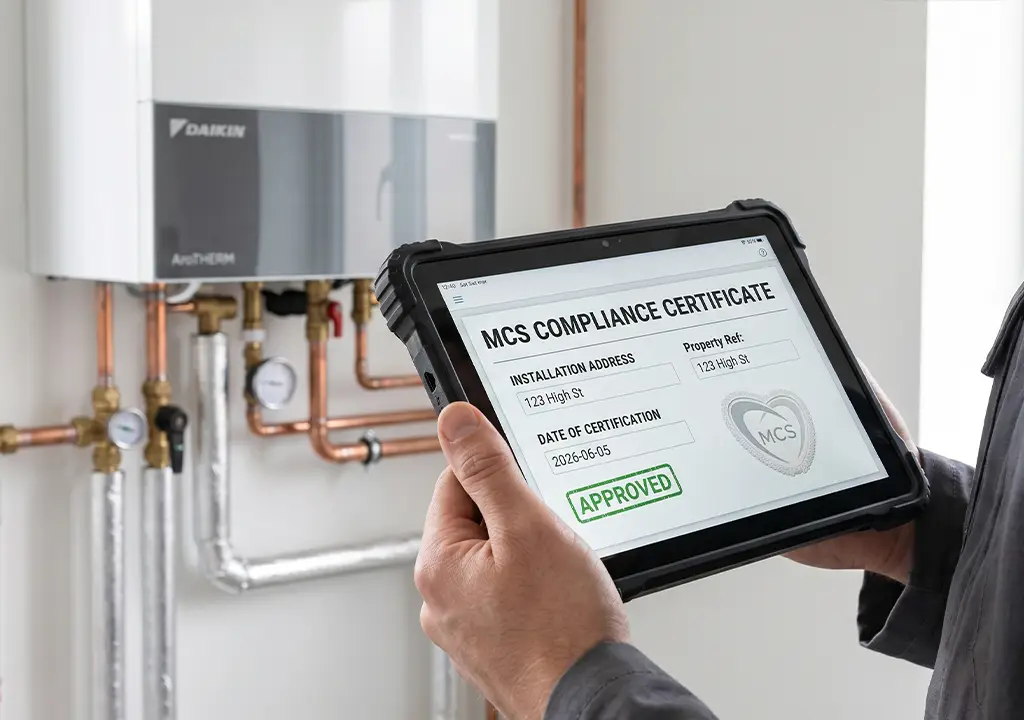
Every single low-carbon heating network we install is fully certified under the Microgeneration Certification Scheme (MCS). This official accreditation guarantees that your system is designed and commissioned to strict safety and performance standards, whilst ensuring your property remains fully eligible for all applicable UK environmental incentives and structural funding frameworks.
Tailored System Design
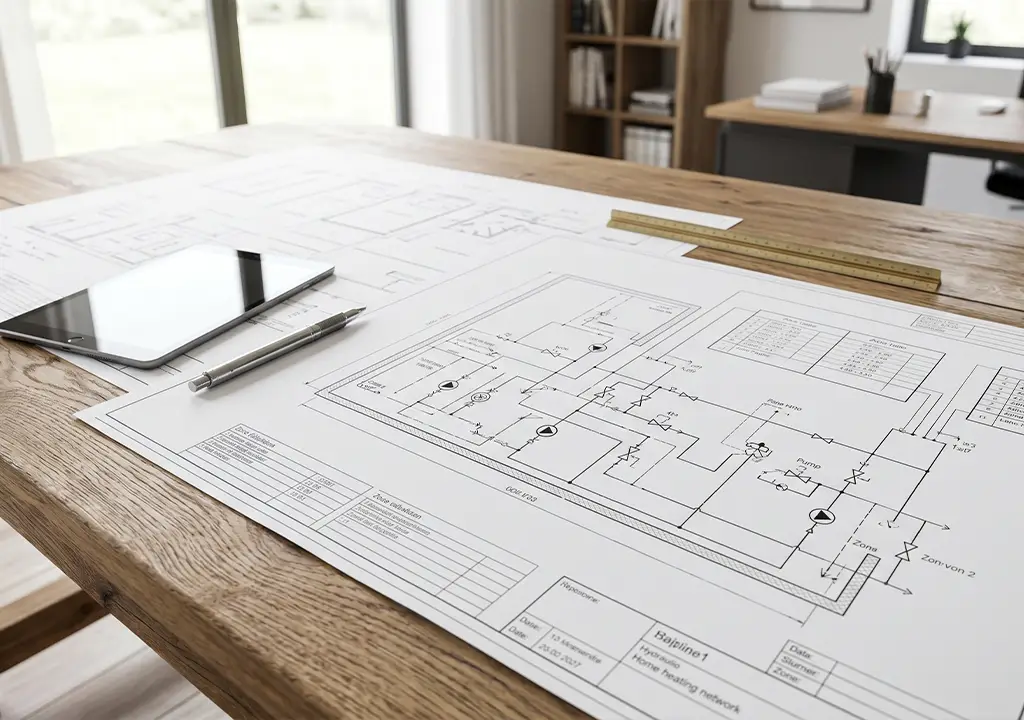
A low-carbon system is only as good as the pipework supporting it. Our certified in-house engineers conduct comprehensive building heat-loss calculations to size your equipment with absolute precision. We custom-engineer your internal plant room layout, optimizing flow rates and cylinder configurations to maximize seasonal operational efficiency.
Dedicated Essex Engineers
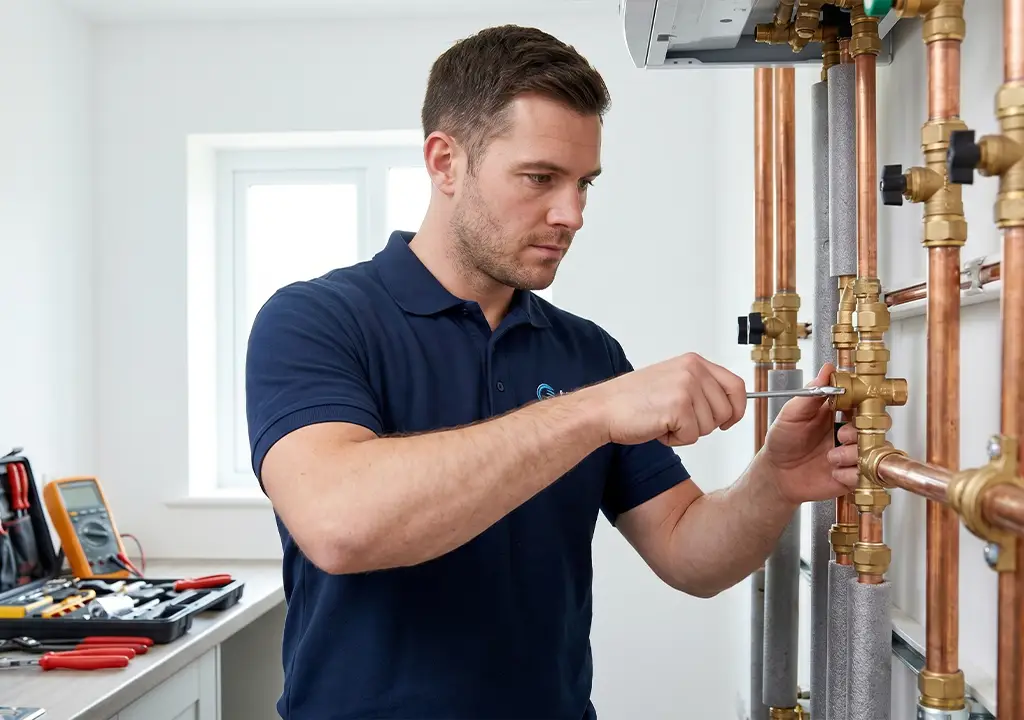
Based locally, our engineering teams possess comprehensive knowledge of Essex housing stock—from heritage rural barn conversions to contemporary urban self-builds. We do not use sub-contractors; our tidy, uniformed professionals handle your entire project from the initial structural roof survey down to the final mechanical commission.

Complete Project Handover
Our relationship does not end when the heating turns on. We provide a meticulous, step-by-step walkthrough of your digital controllers, automated valves, and pump settings. You will receive a complete handover pack containing your MCS certificates, structural compliance paperwork, and comprehensive equipment warranties for absolute peace of mind.
Frequently Asked Questions About Low-Carbon Heating
How do I know which low-carbon technology is right for my property?
Choosing the right system depends entirely on your property’s structural footprint, insulation levels, and existing distribution network. Air source heat pumps are phenomenal for well-insulated retrofits and modern self-builds. Biomass boilers excel in larger, off-grid rural properties with high-temperature requirements. Solar thermal is an elite add-on engineered specifically to slash your domestic hot water bills. Our engineers conduct comprehensive heat-loss surveys to recommend the most efficient mechanical match for your home.
Do I need to replace all my existing radiators to switch to a heat pump or biomass system?
Not necessarily. Biomass boilers operate at high temperatures matching traditional boilers, meaning your existing radiators can usually remain completely unchanged. Heat pumps operate at lower, highly efficient flow temperatures. During our initial design phase, we run room-by-room heat-loss calculations to evaluate your current radiator surface areas. Quite often, only a few key radiators need upgrading to larger or double-panel designs to ensure your home stays perfectly warm.
Can different renewable technologies be combined into a single system?
Absolutely, and this is where advanced plant room engineering truly shines. A highly popular and efficient configuration is pairing an air source heat pump or biomass boiler with a solar thermal array. By utilising a dual-coil unvented cylinder, the solar panels can handle up to 60% of your hot water demands absolutely free during warmer months, allowing your primary heating plant to switch off entirely and extend its operational lifespan.
How long does a typical low-carbon heating installation take to complete?
A standard residential installation generally takes between 3 to 5 consecutive days in the plant room, depending on the complexity of the system integration. A straightforward heat pump retrofitted to a modern layout is incredibly efficient, whilst a full biomass plant room overhaul or a multi-panel solar thermal roof mount might require a more extended structural layout. Our project timelines are mapped out completely during your design phase so you know exactly what to expect.